
Rapido News Today | Bike Taxi Can't be banned by State? GPS Enabled Is safe for Women?
Published by Farhan Rasheed — A True Guide & Real Estate Research Advisor • 20 Nov 2026
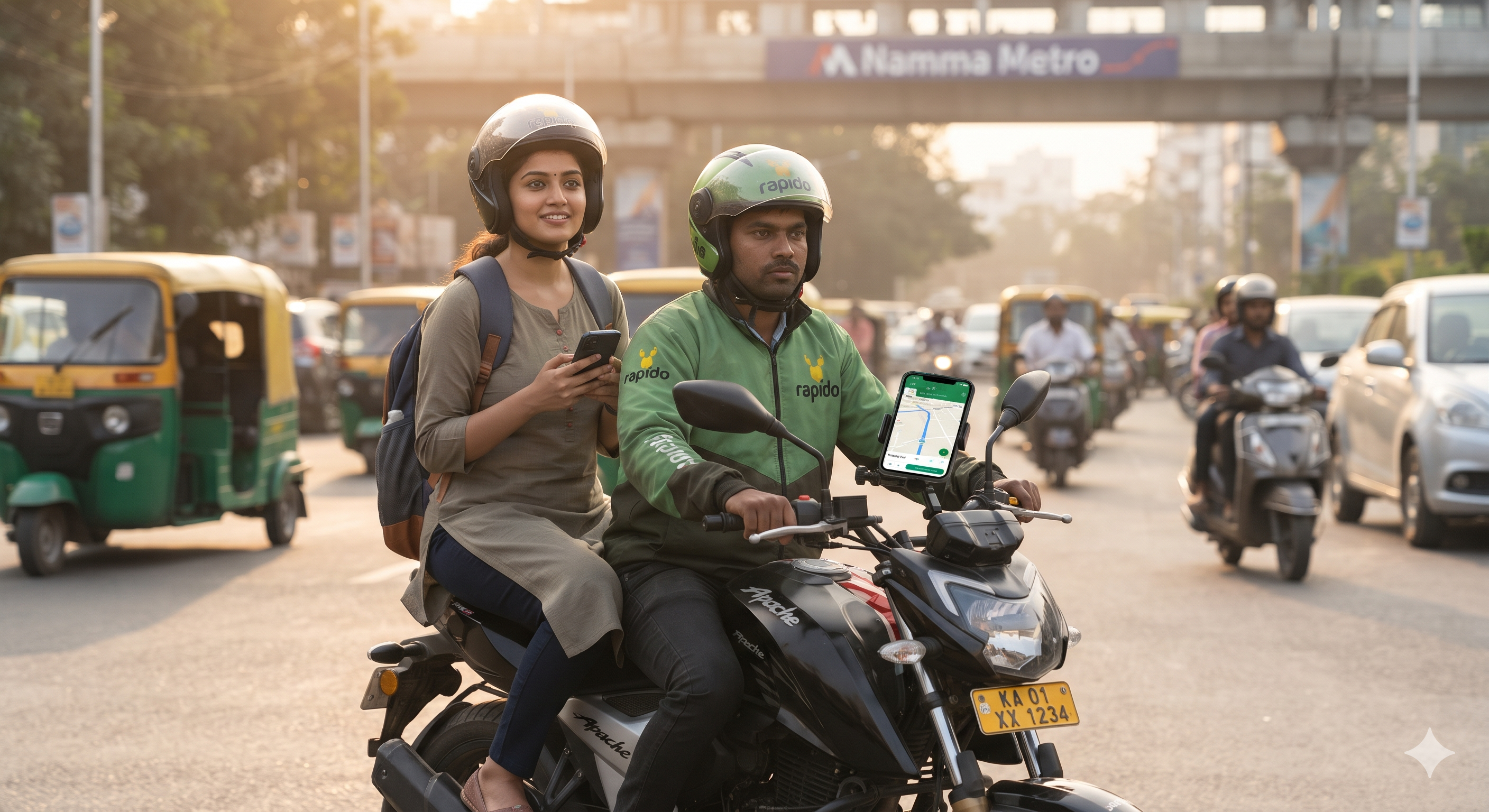
NEW DELHI / BENGALURU — In a major legal victory for daily commuters and gig workers across Bengaluru and Karnataka, the Supreme Court of India on Friday (November 20, 2026) dismissed the Karnataka State government's appeal seeking to restore a blanket ban on bike taxi aggregators including Rapido, Uber Moto, and Ola.
A Division Bench of Justices Satish Chandra Sharma and N. Kotiswar Singh upheld the Karnataka High Court’s January 23, 2026 judgment, affirming that state transport authorities cannot impose an outright prohibition on two-wheeler taxis simply because the vehicle is a motorcycle. Instead, the apex court emphasized that states must regulate bike taxis through safety and permit conditions rather than banning them.
Key Highlights of the November 20, 2026 Supreme Court Verdict
| Court & Bench | Supreme Court of India — Justices Satish Chandra Sharma & N. Kotiswar Singh |
|---|---|
| Case Outcome | Karnataka State's SLP dismissed; High Court order allowing bike taxis upheld |
| Legal Status | Motorcycles eligible for transport vehicle registration & contract carriage permits |
| Commuter Impact | Protects ~4.5 lakh daily bike taxi riders across Karnataka; active in 25 Indian states |
Can a State Government Ban Bike Taxis? What the Court Ruled
During the hearing, the Karnataka government—represented by Senior Advocates Vikas Singh and Parag Tripathi—argued that motorcycles and motor cabs are defined separately under the Motor Vehicles Act, 1988, and cited a 2019 expert committee report raising concerns over traffic congestion, road safety, and pollution in Bengaluru. Five traditional auto and taxi driver unions also opposed bike taxis, arguing that two-wheeler aggregators operate without equivalent permit obligations.
However, the Supreme Court rejected these challenges on three core grounds:
- Central Government Confirmation: Responding to a direct query from the Bench, the Central Government confirmed that motorcycles can legally be registered and used as transport vehicles or contract carriages under its 2004 and 2024 notifications.
- Regulate, Don’t Prohibit: With the state's Special Leave Petition (SLP) dismissed, the High Court’s directive stands—Karnataka’s Regional Transport Authorities (RTOs) must process applications to register motorcycles as transport vehicles and grant contract carriage permits subject to reasonable regulatory rules.
- Traffic & Affordability Reality: The Bench observed that motorcycles occupy far less road space than cars and serve as a vital, affordable last-mile link for nearly 4.5 lakh daily passengers across Karnataka.
"GPS-Enabled Bike Taxis Are Safer for Young Women": Justice Satish Chandra Sharma
While pronouncing the verdict, Justice Satish Chandra Sharma made pointed oral observations highlighting both passenger safety and commute affordability for working women:
"Bike taxi is safer for young girls as it has GPS as well. It is better to regulate it than ban it. Bike taxi is already there in 25 States. I asked young girls in my office how they come to office—they said bike taxis. They said auto is five times the cost."
The Bench noted that app-based aggregators provide real-time GPS trip tracking, verified rider credentials, and digital fare transparency, making them an accessible and traceable commute option for students and young female professionals who cannot afford five-times-higher auto or cab fares for daily office travel.
What Happens Next for Rapido, Uber, and Ola in Bengaluru?
Following the November 20, 2026 Supreme Court order—which brings closure to a regulatory dispute dating back to Karnataka's March 6, 2024 scrapping of its Electric Bike Taxi Scheme 2021[cite: 1]—commuters and aggregators can expect three immediate developments:
- Uninterrupted Operations: Bike taxi services by Rapido, Uber Moto, and Ola across Bengaluru and Karnataka remain legally protected.
- Commercial Permit & Safety Rules: The Karnataka Transport Department can frame standard operational guidelines—such as commercial yellow-plate registration, mandatory helmets for both rider and pillion, active GPS tracking, and third-party passenger insurance—but cannot reject permits outright.
- National Legal Precedent: Because the Supreme Court noted that bike taxis already operate across 25 Indian states, today’s ruling establishes a clear legal benchmark against arbitrary state-level blanket bans nationwide.
Have Questions About This Report?
Connect directly with Farhan Rasheed for property & RERA advisory.